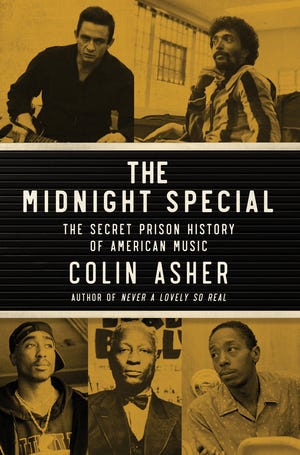
Welcome back to SOURCE NOTES, in which primo narrative history authors peel back the curtain on the research behind their books. I’m pleased to introduce you to my pal Colin Asher, whose new book, THE MIDNIGHT SPECIAL: The Secret Prison History of American Music, got a downright dreamy review from Dwight Garner: “A fog-piercing down-bound train of a book, better than it had to be.” Can’t ask for better promo copy than that! But anyway…
Tell me about THE MIDNIGHT SPECIAL.
The elevator pitch is that it’s a history of American music that focuses on the role of policing and incarceration. It picks five albums that span about one hundred years of American musical history, and then tries to draw different lessons about the way that policing and incarceration shaped music in the era in question.
How did you come up with this?
The five albums are a Lead Belly album, a jazz album by Elmo Hope called Sounds From Rikers Island, At San Quentin by Johnny Cash, a moderately obscure soul album by Ike White called Changin’ Times, and Tupac’s Me Against the World. The whole idea started with the second album, Sounds From Rikers Island. As I got into jazz later in life, I stumbled on this album and got really into it. I started thinking there was something interesting there to dig into, between the sort of modern perception of jazz as very intellectual, high-class music, and the existence of this album, which was created explicitly to point out that jazz musicians, when it was created in the late sixties, were the subject of great persecution by the police, and that so many of them had passed through Rikers Island. So I pitched that idea to my editor, who said, I love that idea, it’s brilliant, but nobody buys jazz books, and nobody buys single-album books. But he said, you know, take the concept, and if you can make it bigger, we’ve got something.
Elmo Hope and Ike White are more obscure than the others. Give me an overview of the research that went into their stories.
Those are the two sections of the book I ended up feeling closest to in some ways. Elmo Hope, I don’t want to diminish him, but he’s sort of a footnote in a bunch of other people’s stories. There was a great Sonny Rollins biography a few years ago and Elmo gets like three paragraphs. Elmo was best friends for a while with Thelonious Monk, and he shows up in a few paragraphs in Monk’s biography. There’s only one interview that he ever gave of any significance. I was never able to find a second one, so that’s what I had to start with. I had that and I had some liner notes, which can be useful, but also not always the most reliable. His wife is still alive, Bertha Hope, so I had her. She’s a brilliant musician, and even though she’s coming up on ninety, she still performs. His daughter, Monica Hope, spoke with me, so I did what I could with the extant record and with those interviews. The next thing that I ended up doing was looking into oral histories. For me, my first book was a literary biography. I was very accustomed to being able to find lots of letters, and in the jazz world, that’s just not really a thing, as far as I can tell, or really with any musicians.
Right. So these aren’t the types of people whose papers are sitting in a university archive somewhere.
None of the main figures in my book are. Cash might be the exception, but I never did a ton of archival research for him, and Lead Belly does show up a lot in the archives of John Lomax, but there isn’t anywhere you can go and find the Elmo Hope archive. But with the oral histories, I actually was able to sketch out that section of the book pretty decently. But after I had finished drafting the section and moved on to another one, I got a call back from the New York City Municipal Archives.
What did they have?
Something that was mentioned in Sonny Rollins’ biography. Rollins also was arrested and sent to Rikers Island, and he and Elmo were there together. By looking at the end notes of the Rollins biography, I knew that there were these district attorney log books. So I put in a request for them, found his name in those, and from there, the archivists were able to lead me to his probation files, which is not a thing I even knew existed, and that was just a treasure trove. It was one of these moments where, I’m sitting there, I put in this request, they tell me to come back the next day, and when I come, there’s a box about this tall on the desk, and I thought that they were going to direct me to one folder in this box, but the whole box was about Elmo.
Incredible.
Yeah. This thing was filled with psych reports, employment verification letters. They wrote to every school he ever went to to see what kind of student he was. His rap sheet was in there. Tons of court transcripts. Letters from people who are, you know, urging probation to go easy on him, tons and tons of stuff, much of which had never been reported before.
And what about Ike White?
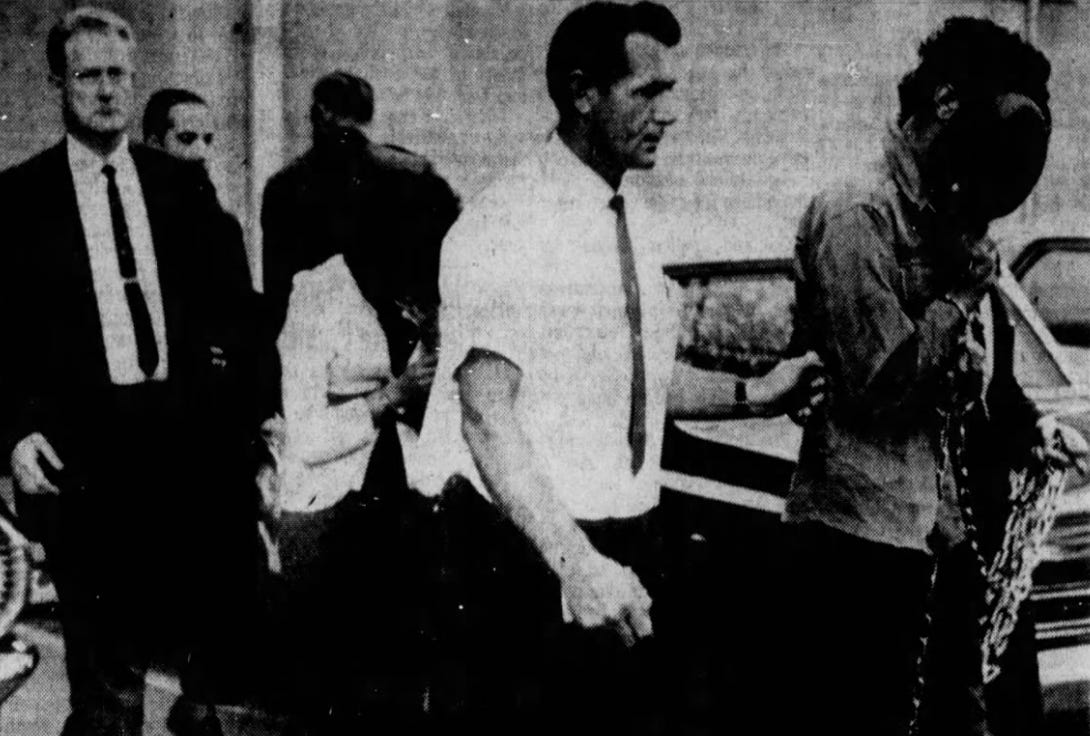
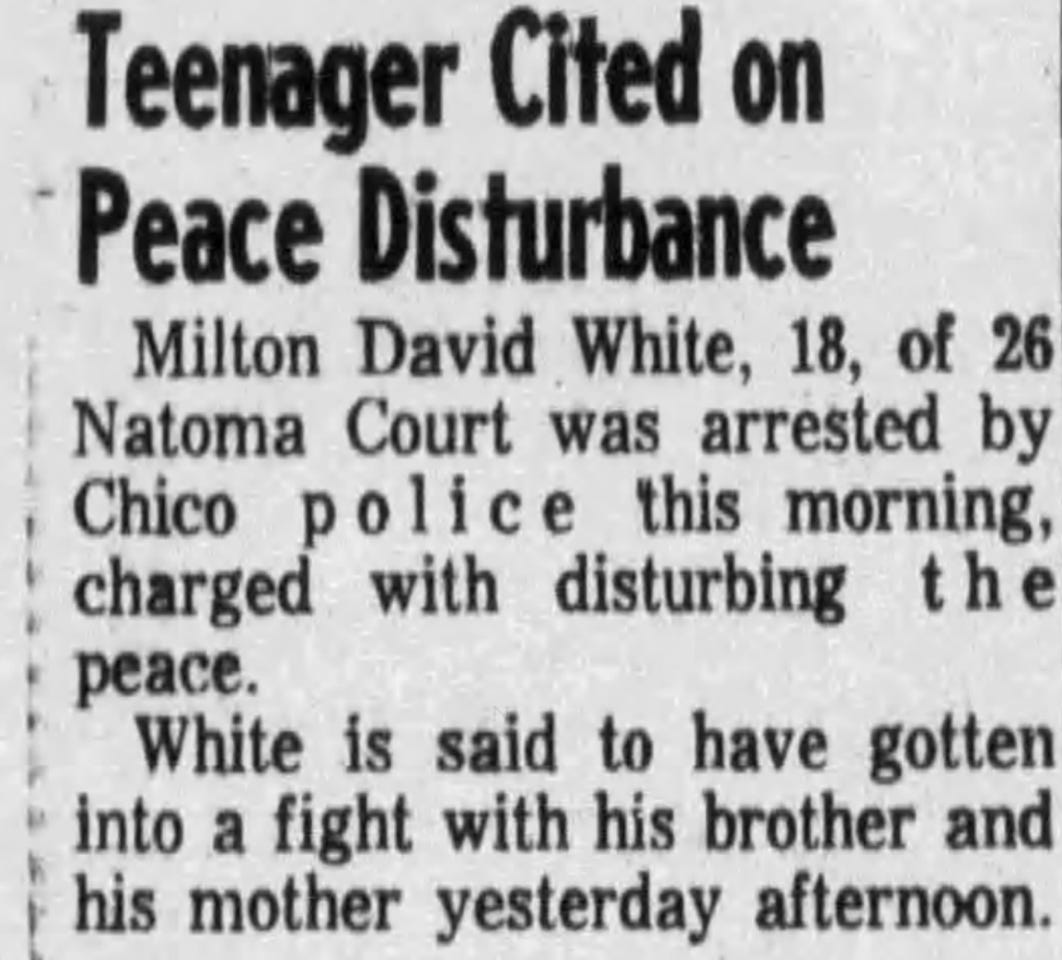
Ike’s another fascinating and sort of shadowy character. He was arrested in his late teens and ends up serving a bunch of time in the California prisons. He has this entire musical career basically within the prison system. While he’s still incarcerated, he records this album that has some really, truly brilliant moments, and it was released while he was still locked up, and you know, partly just because of that history, a lot was obscure about him. He got on my radar because there’s actually a documentary about him, which is quite good, and anybody reading should check it out. It’s called The Changin’ Times of Ike White. But that documentary was really interested in what happened with Ike after he gets out of prison, and for my purposes, I wanted to know what was going on while he was in prison, and how he got there. The research for him was a bit different. One thing that I really wanted to get a sense of was his early years, which he didn’t talk a ton about in the documentary. And so with him, a lot of it was pinning down the details of the crime that ended up sending him to prison. It’s something that he lied about a good bit. It took a lot of newspaper research, which is much different than Elmo, who rarely popped up in the newspapers.
Were you able to find what you needed on newspapers.com or was there stuff that you could only view on microfilm?
Newspapers.com and library archives. Some local Berkeley papers aren’t on newspapers.com, but I was able to find them. I ended up finding some, like, thirty or forty stories documenting the original crime, the hunt for the suspects, and the trial that comes after that.
For the more well-known characters, was that research mostly books and magazine articles and stuff like that?
Lead Belly, Johnny Cash, and Tupac Shakur all have reliable biographies, and pretty good biographies. I felt like I had some leeway for those sections to be more essayistic, not necessarily research heavy. Writing about somebody like Johnny Cash, who is such a famous figure, the research ended up being a lot of just placing his music within its cultural moment. So for instance, it was tracking down how many other albums had been recorded in prison around the time that he did his prison recordings. It was making catalogs of his lyrics and then going through and counting, you know, how many songs did he write that were sort of bad man ballads or prison songs, and how does the tone of them change over time?
I wanna hear about this Colonel Sanders rabbit hole you went down while researching Cash.
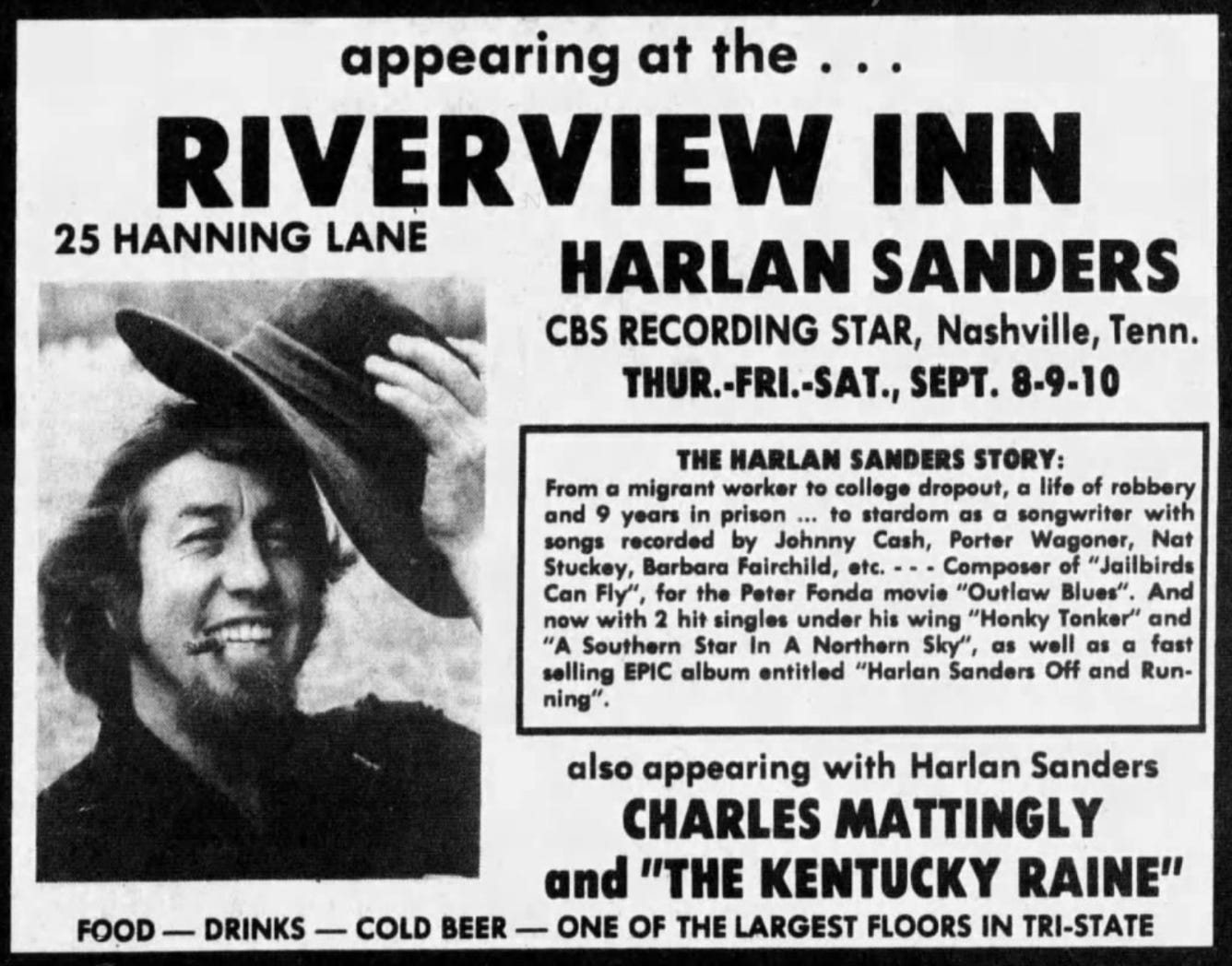
One of the things I got really interested in was, there are these two incarcerated musicians who he helps out a ton. One is Glen Sherley, who’s a fairly well-known part of the Johnny Cash story. The other is a guy named Harlan Sanders. I started trying to find whatever I could about him, and it turns out he shares his name with Colonel Sanders of KFC. The Colonel’s first name is actually Harland with a D, but the newspapers often spelled it Harlan, and even so, the search terms are very similar. So there was a week of, like, just sifting through hundreds and hundreds of newspapers to find the ones that were written about Harlan Sanders, the musician.
No stone unturned.
Yeah. I ended up spending a stupid amount of time on it. I mean, at a certain point it was just petulance.
Do you have an idea of what you want to work on next?
I wish. I have a couple ideas, but my ideas are all famously not very commercial, so I have no idea if my agent will go for them.