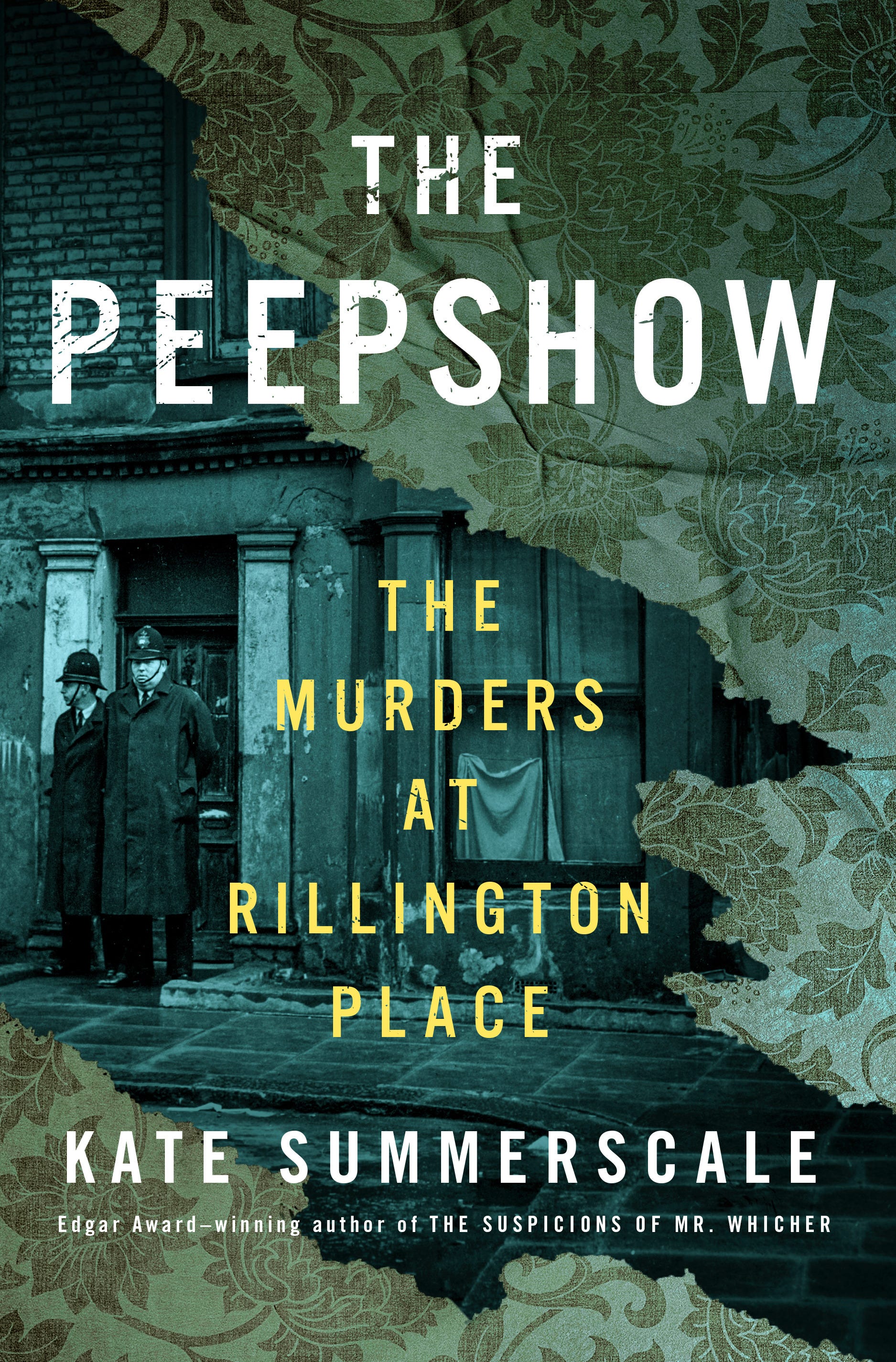
Welcome back to SOURCE NOTES. I first learned about Britain’s infamous Rillington Place murders from reading Kate Winkler Dawson’s DEATH IN THE AIR, in which the crime narrative is engulfed—quite literally—by the Great Smog that choked London in 1952. So I was excited to find a pitch in my inbox about a fresh look at the saga from the great Kate Summerscale, author of THE SUSPICIONS OF MR. WHICHER, THE HAUNTING OF ALMA FIELDING, and other chilling true mysteries of old. The U.S. edition of Kate’s latest, THE PEEPSHOW, hits shelves Tuesday, May 6. What are you waiting for? Pre-order it now! In the meantime…
What’s THE PEEPSHOW about?
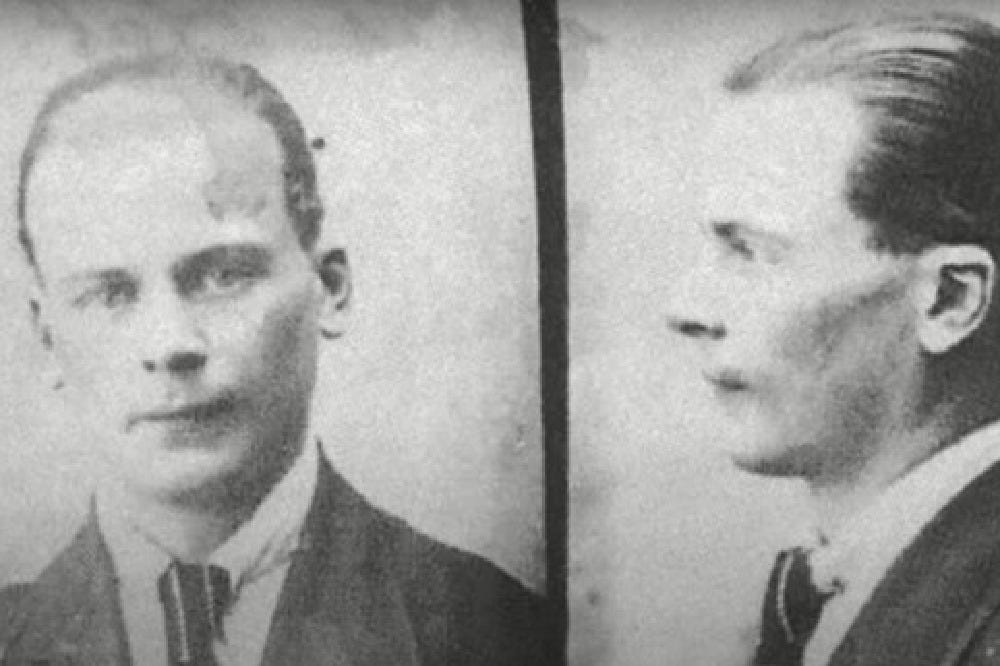
The story starts in March 1953, when a horrifying discovery was made at this tiny terrace house in West London, in Notting Hill. The bodies of three women were walled up in the kitchen, the body of another woman was under the floorboards in the front room, and the bones of two other women were discovered in the back garden. A manhunt was launched for the tenant of the property, who had fled about a week earlier. He was John Reginald Christie, an apparently respectable, middle-aged man, who it turned out had gassed, raped and strangled most of the women in his house. The twist of his story is that some journalists quickly realized there had been another double murder in the exact same property three years earlier, of a woman and her child, Beryl and Geraldine Evans. The woman's husband, Tim Evans, and another man had been hanged for the crime, even though, briefly, in the course of the investigation, he had accused Christie, his downstairs neighbor, of having killed his wife and daughter. So suddenly it became apparent that there might have been a terrible miscarriage of justice, and this young man had been hanged in error. So it’s a story about a serial killer, how he operated, how he got away with it for so long, but also about this very politically charged possible miscarriage of justice.
What sparked your interest in revisiting the Christie murders?
I think it was because there were a couple of striking incidents in London in 2019, 2020, 2021, of women being murdered by strangers. In one case, the murderer said he had intended to kill six women in six months. And I began thinking about why some men choose to kill women, specifically because they were women, not because they had any personal history or grudge against them, and the story of Reg Christie dimly came to me. I’d seen his figure in a wax works museum when I was eight years old. I’d watched the film about the murders on late-night TV when I was in my teens. I knew hardly anything about it, but I had a sense that he was perhaps the most notorious serial killer in Britain in the years immediately after the Second World War. And so I decided to look him up as a way of trying to understand his motivations, and how they were influenced by the world in which he lived.
When did you start working on the book?
In 2020. I went to the National Archives in Southwest London, and there was an extraordinary amount of material on the case, because there’d been two public inquiries. There were Home Office files, government files, police files. There were prison files on Christie and his time at Brixton and Pentonville prisons. There was more material than I’ve ever dealt with in my years of researching stories.
Is that because this story is more recent than the ones in your other books?
Not in this case. I mean, the Victorian records are extraordinarily extensive if they’ve been retained. I have worked on stories where records were retained by the Metropolitan Police, by Scotland Yard, and they're very thorough and detailed. The Victorian newspapers were incredibly rich and detailed. Their coverage of trials is almost complete transcripts.
How did researching a story from the fifties compare to researching your books from the Victorian era or the early 20th Century?
It does feel like you have a bit a more freedom the further back in time you are—to speculate, to explore the after lives of the cases. But in fact one book I wrote, THE WICKED BOY, about a thirteen-year-old who murdered his mother in 1895—the research took me all the way to Australia and to an elderly man, a ninety-five-year-old man who had been brought up by this boy as an adult, and who had not known he was a murderer. So that was a big shocker. Even a Victorian crime can have a very long tail.
For THE PEEPSHOW, what other archives did you go digging in aside from the National Archives?
I went to an archive in Lincolnshire where the letters and diaries of a woman called Fryniwyd Tennyson Jesse were kept.
She’s one of your journalist characters.
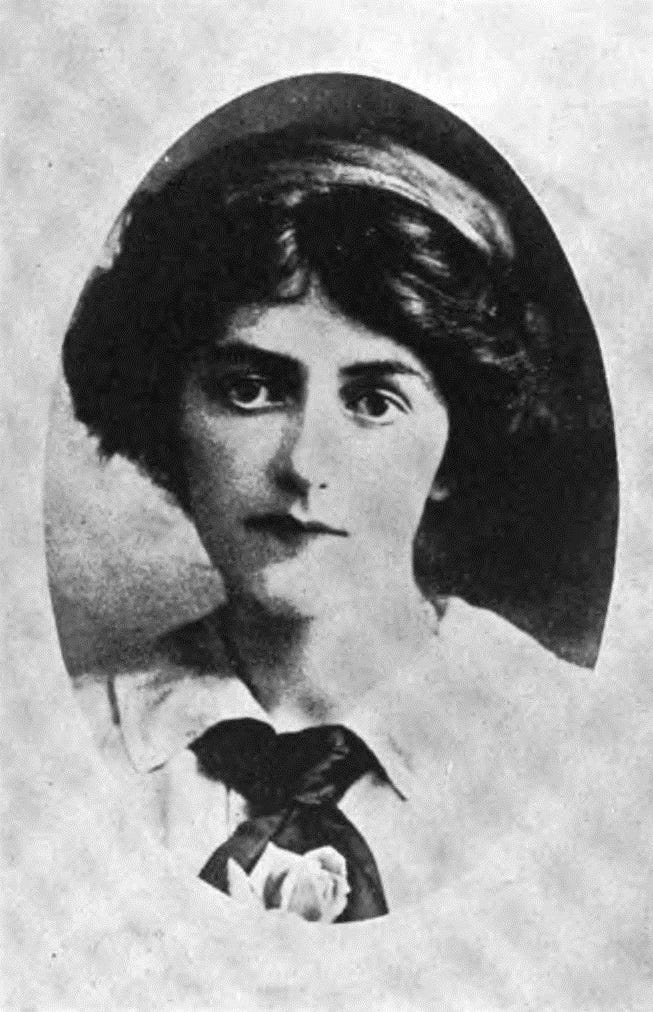
Yes. She covered the case as it unfolded. She was there at the Old Bailey for the trial, and she wrote a very influential extended essay about the case and about whether Christie or Tim Evans was guilty of the murders of the woman and child three years earlier. She was a very sort of quiet, highbrow novelist and pioneering true crime writer. She also had a very troubled life. She was addicted to morphine. She was devastated by her inability to have a child of her own. And she seized on this case as a way of kind of absorbing her energies and rehabilitating her reputation. So her letters about it were fascinating. She met all the barristers involved, the family of some of the victims, the police detectives who were involved in the case. I was able to piece a lot of that together from her archive and get a kind of day by day, or week by week, sense of where she was and what she was doing, and how her thinking was changing and why she reached the conclusion she did.
Did you find any material about the case that hadn't been published before?
Well, pulling together her story, and also the story of a tabloid journalist called Harry Procter, which I gathered not through archives, principally, but through a chapter in a memoir he published, and by talking to his daughters. Those were sort of fresh perspectives on the case. As for the mystery at the heart of the case, of who killed Beryl and Geraldine Evans, I did find some material in the Home Office files at the National Archives. I found a memo from a prison guard, which detailed a conversation he had with Christie immediately after Christie had been sentenced to death, in which Christie made a confession. And I also found some letters between men in government at the time, showing how they had suppressed the story in this prison guard’s memo. I thought at first, well, maybe Christie’s just telling more lies, attracting more attention. But as I continued my research, this memo kind of came back to me as something that actually might make sense of all the contradictions and confusions in the stories told by the two men, Reg Christie and Tim Evans, and might explain how the double murder came about and why. So that was very exciting.
In terms of press coverage, which newspapers did you rely on the most?
The tabloids, which at the time were extremely profitable and widely read, had lots of money to pay for stories and send out their reporters, who were very competitive with one another. They did the most unearthing of new witnesses or new angles, or graphics of the house, information of that sort.
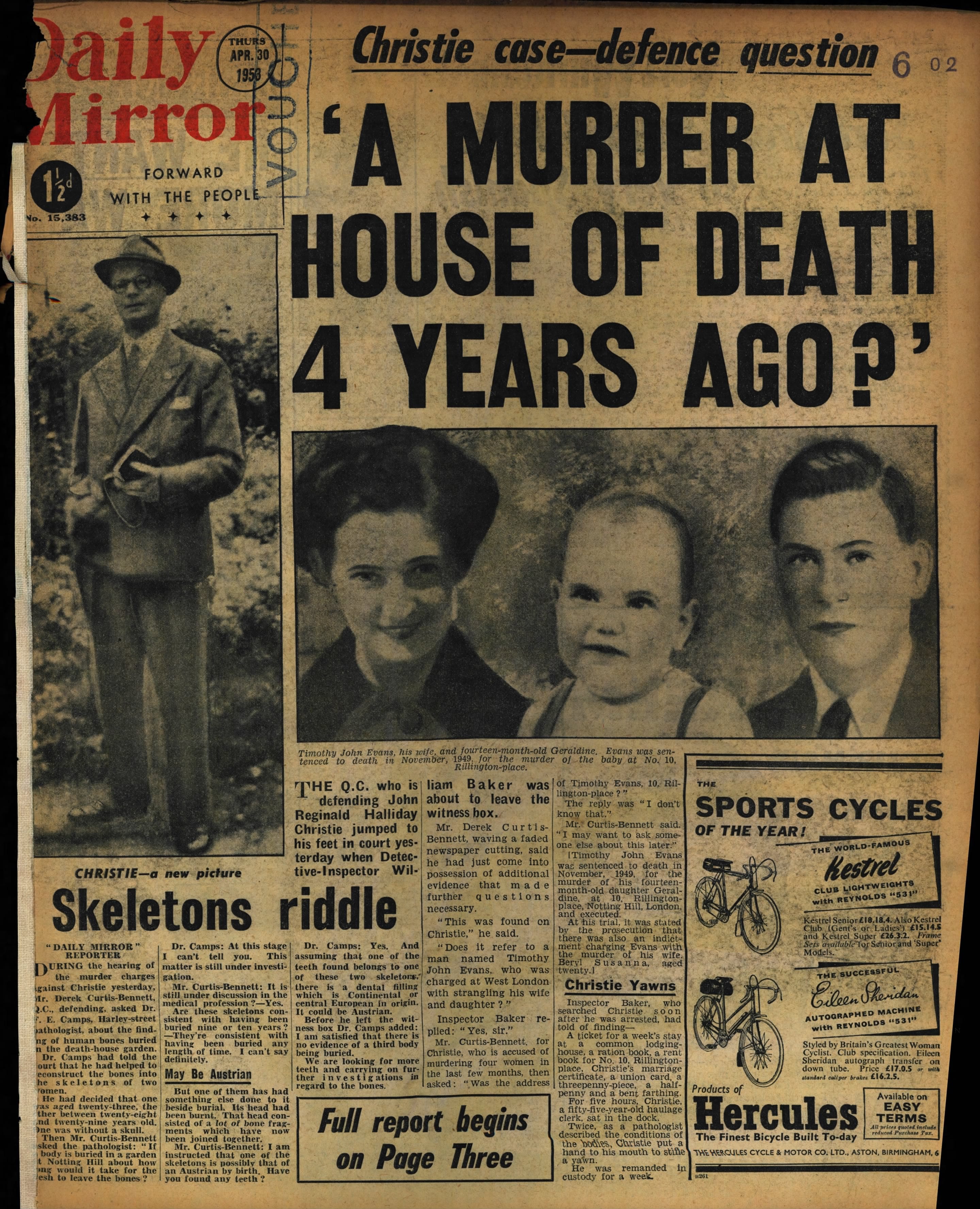
But the broadsheet papers, the more upmarket papers, did cover this in tremendous detail. They gave very, very full accounts of all the hearings and the trial itself. The Telegraph in particulars was amazing for detailed accounts of trial and magistrates’ hearings. The Guardian was very good on local color. The day after the murders were uncovered in March 1953, they sent a reporter who did a kind of color piece about the street itself, the neighbors, the disruption of life in the street, the fact that a little boy was digging between the paving stones with a match, digging out moss, calling out to his friend, “Johnny, let’s play dig up the bodies!”
Tell me about touring the Old Bailey.
I’d never been to the Old Bailey before. A judge was able to take me all around Court Number One, which is where both Tim Evans and Christie were tried. That was pretty astonishing. I was struck by how small it was, how intimate, how theatrically everything was arranged. The space wasn't just divided up horizontally, but sort of vertically, so that the judge would be quite high up. And then there’d be a well with the lawyers, a public gallery way up high, almost in the roof. The sense of theater, and also a sense of how different people would’ve had different angles on what was unfolding, was really brought home to me. I was also shown how, from the dock where the defendant would stand, he would be accompanied by a couple of guards, and there was a staircase from the dock all the way down to the cells at the bottom, like two floors below. So the defendant, the prisoner, his feet never touched any other part of the courtroom or the halls outside. I went down into the cells where he would’ve been kept.
Incredible.
I also went to the site of 10 Rillington Place itself, the address of probably the most notorious crime scene in Britain where a series of murders is known more by the name of the place they were committed than by the name of the perpetrator. Although the house was visited by tourists for years afterwards, it was eventually demolished. But many other things from the time Christie lived in the neighborhood were still there.
Can you say what you’re working on next?
I’m researching a handful of different ideas to see which will work best for me, and what I can find the most material on, the best material. So I’ve got a few irons in the fire.
Do you want to go back further into history again, or are you interested in maybe doing something even more recent than the 1950s?
I’m open to either. The stories I’m researching are from the 19th Century and the 20th Century. I don’t think I’d want to come a lot nearer the present day, but you never know.