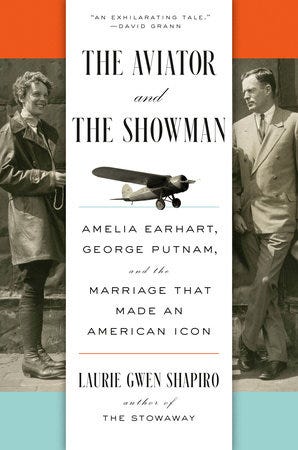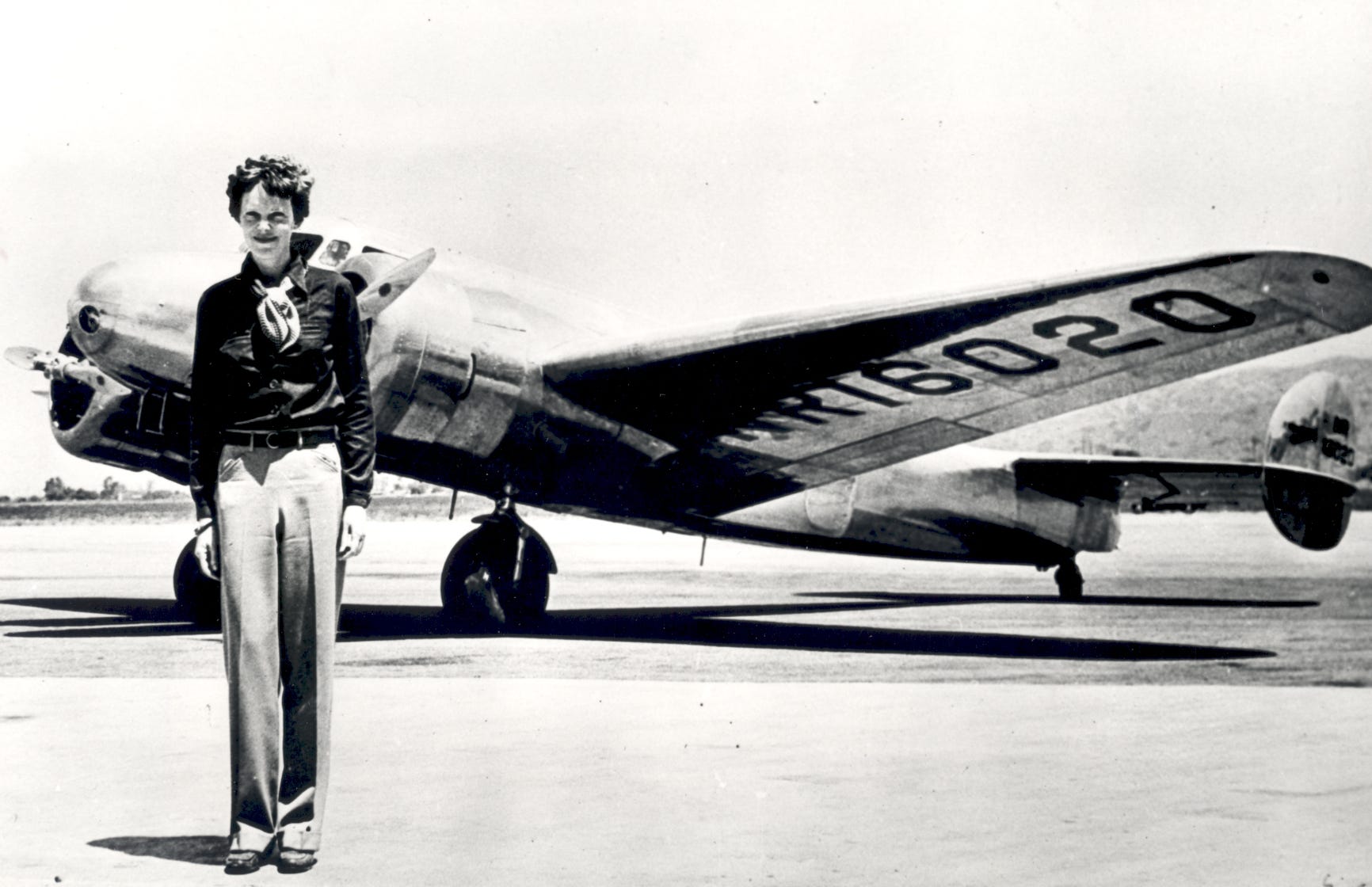
Welcome back to SOURCE NOTES. This month we’ve got Laurie Gwen Shapiro talking about the too-good-to-be-true research breakthroughs behind her dishy new book, THE AVIATOR AND THE SHOWMAN: Amelia Earhart, George Putnam, and the Marriage that Made an American Icon. Maybe you’re already familiar with it, either from the reviews (“Shapiro reveals in painstaking detail that Earhart’s storied career did indeed involve many reckless and publicity-seeking adventures, largely thanks to the near-depraved ambitions of her husband and Pygmalion-like manager”), or the headline-making New Yorker excerpt (“Amelia Earhart’s Reckless Final Flights”), or even the front page of this past weekend’s New York Times Real Estate section. Either way, sit back and enjoy the flight…
Would it be accurate to call THE AVIATOR AND THE SHOWMAN the story of a fateful relationship that led both to Amelia’s renown and her doom?
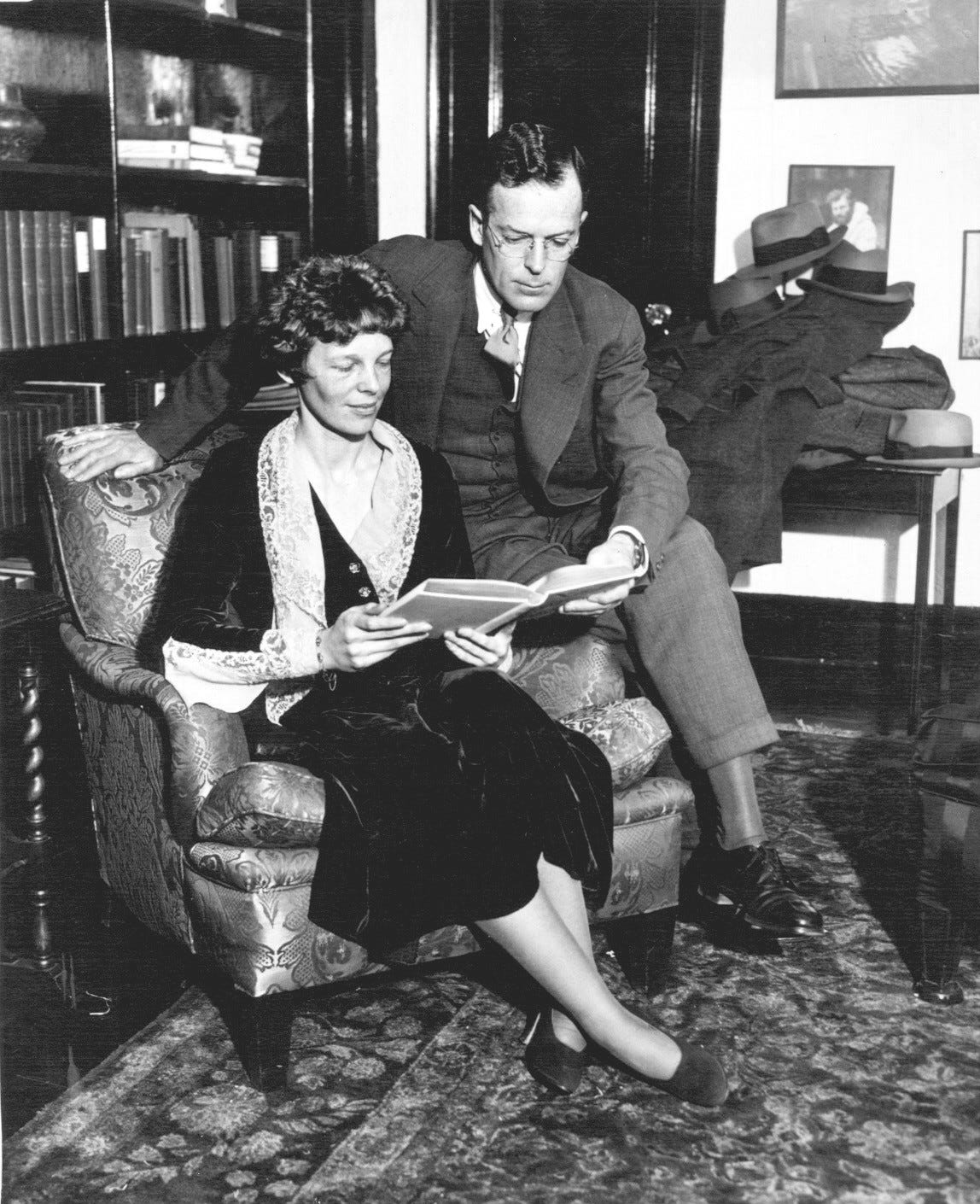
What I try to show in this book, which I think of as a book about ambition and marriage, is that both Amelia and George, from the get go, are ambitious and reckless. That doesn’t mean that Amelia Earhart can’t later inspire millions of women, or that she’s not brave and a good person. But the Amelia Earhart that inspires women—and men too, but mostly women—that Amelia was basically a creation between Amelia and her husband. You can say she was the first influencer. She had skill, but she was always promoted above the actual skill level that she had, and that’s a very dangerous endeavor. The story is not always the way people want it to be. They want Amelia to be the best woman flyer. They want her to have created her own path. And that’s just not the story.
You write in the intro, “I found myself not only as a researcher, but also something of an avenger. It was astonishing how much time and effort I spent debunking Earhart lore. Not to mention coming up against influential people with a stake in hiding the facts.”
I had very bad interactions with some of the people who are gatekeepers of the story. One woman—I won’t name her name—she said to me, “I know more about Amelia Earhart than you ever will, and I wish you no luck!” And then there are the men who have made Amelia Earhart into a cottage industry. They say Amelia was taken by the Japanese, or that she landed on an island, and it makes money for them.
Some of them are coming after you now, right?
People are coordinating efforts under anonymous names to one-star my book. They say, oh, she didn’t do her research. And yet, I’ve listened to two-hundred hours of audio tapes that no else ever has.
I wanna hear about that but first give me a sense of where your research started.
Like everyone who studies Amelia Earhart, you have to go to Purdue, which has a lot of George Putnam’s stuff. And then Radcliffe has the second big archive, donated by Amelia’s sister, Muriel Earhart Morrissey. Those are the two primary ones. I sold the book in November 2019, and I flew to Purdue the day after getting my first check. Then I flew immediately to Boston and did my research there. A lot of this stuff has all been picked over, so next I started to look for places that might have, like, one letter from Amelia or whatever. And I found this really weird collection at the University of New Hampshire. It was from was a conspiracy theorist. You know, one of those people who had been like, She was taken by the Japanese! It was from 1958, and he had interviewed a lot of the people that knew Amelia Earhart, because in 1958, everybody was still alive.
What did you find in those papers?
A man named Hilton Railey. He’s a very important player because he was the guy who discovered Amelia Earhart and he knew George. He was a P.R. guy with offices in New York and Boston. He was good friends with Amelia and he brought Amelia to George’s attention. He’s the one that found her, and he was very much there from the very beginning, so he is a real insider.
OK let’s get to the tapes.
I started to hear about these tapes that someone had made in the seventies, a man named Elgen Long. He is someone who wanted to solve the mystery of how she disappeared.
So he interviewed principals who were in Amelia and George’s orbit?
Yeah, including George’s other three wives, George’s sons, Amelia’s sister, all of her friends that were pilots, the newspaper reporters that knew her. I mean, I was like, how do I get this?
How did you hear about these tapes?
From doing interviews. The organization that was given the tapes after Elgen’s death was negotiating their donation to the Smithsonian. No one had actually digitized these tapes. No one had ever even listened to these tapes. And I’m looking at the clock. Finally, I got a call one day, six weeks before my book was due, that they’d been digitized.
Nick of time!
I got a list of who was recorded, and I didn’t know who everybody was, but it was from all parts of her story. Elgen was an aviation investigator. He was doing these interviews with his wife, Marie Long. Anytime anything personal was asked, Marie would say, we don’t need to know that. And I’m sitting there screaming at the audio like, we need to know that! She would say, this is private, can we shut the tape off? But often there would be twenty seconds where they hadn’t yet shut the tape off. Things would be whispered. My husband is a musician and has a little recording studio. I would have him actually defuzz the audio and amplify it, and eventually you could hear things being said. Things like, you know, George’s wife walking in on Amelia having sex with him. A different story comes out because it’s not meant to be heard. These archives are now in the Smithsonian Institute. They're available online for people to listen to. So if anyone says, that couldn’t possibly be true, you can go listen to the tapes.
So this is even better than the Hilton Railey stuff.
I mean, it’s people talking about her flying ability. And not just Elinor Smith, who was a rival. Amelia’s best friend, Louise Thaden, who was a great aviator, is saying, she was an incredible person, brave, but she wasn’t the best flyer.
This is obviously the biggest breakthrough you had for the book.
Yeah. It’s more than two-hundred hours. It became a different book. I had to ask for an extension.
What’s an example of something no one ever knew that you were able to reveal?
She had a sugar daddy in the Jazz Age. People say she was engaged to this man named Sam Chapman. There’s a famous car she drove, and the story is that she saved up for it. No! She was very ambitious. Women have always used men as a way to get higher in the world. Amelia Earhart is no different. That doesn’t make her a bad person. She was twenty-one and she was trying to marry this guy who was sixty-four and a millionaire. He bought her that famous car! But that tells you who she is. One thing I learned from the tapes is that everyone loved Amelia Earhart, which was really nice. I was worried she was gonna be a secret Nazi like Lindbergh. And one of the other things I learned from the tapes is that everyone hated Putnam. And that’s interesting. Like, this is a choice she made. It’s not like she didn’t know who he was. She was a really ambitious person.
Do you know if any of Amelia’s other biographers tried to track these tapes down?
I don’t think they knew the tapes existed. They only came to light because Elgen died and then there was this donation to the Smithsonian. I also interviewed Elgen’s granddaughter. He was absolutely sure he was gonna find Amelia’s plane. He was an investigator, not a writer. So for his own book, he takes out all the personal stuff. He took out anything that, like, his wife was horrified by because it was unseemly. But as a narrative nonfiction writer, I live for the unseemly. That’s the juice. That doesn't mean I’m tearing Amelia Earhart down. She was a good person. Like, a lot of these women that were better flyers than her were not trying to lift women up. They were going for their records. They wanted their money. But Amelia was always about helping other women.
Give me an example of a moment when you were listening to the tapes and you couldn’t believe what you were hearing.
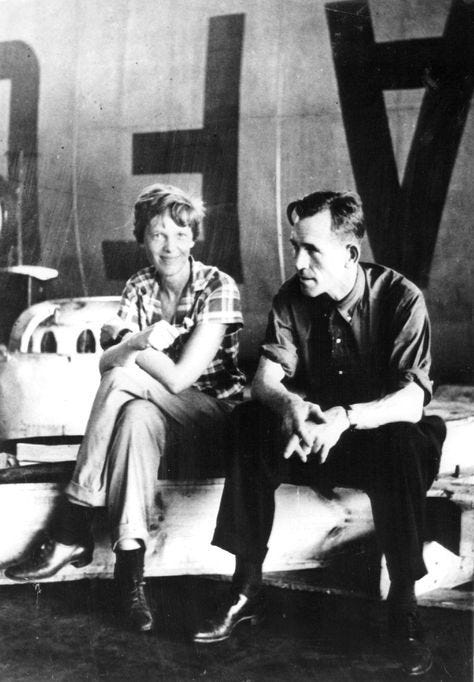
Fred Noonan, he was her navigator. I knew that Fred Noonan had come cheap, because he was a very good navigator, but he was also an alcoholic and had been fired from Pan Am. On these tapes, Elgen goes to New Guinea, and he’s interviewing the people who were hanging out with Noonan before he left with Amelia and they disappeared. What they were saying was that, by the time they got to Indonesia, he had been drinking again—which is documented elsewhere in the tapes—and he was absolutely not getting along with Amelia. He had been rip roaring drunk hanging out with the Australians that were there. At one point, he calls her a skinny bitch. I mean, it’s a completely different story than we’ve been told.
Incredible.
It’s two-hundred hours of tapes, and if you just listen to it all, it might not make any sense. But what was really great for me is that it came at the end of my journey. I started out not knowing enough. I was like, how am I gonna do this? I felt like a charlatan. Four years later, I’d listen to a description of someone on the tapes and I’d know who it was. I was able to connect the dots, whereas maybe a casual listener would say, I don’t know who the hell these people are. So the greatest gift was that these tapes came to me at the very end. If I had listened to them two years earlier, I probably would’ve missed a lot.
I need to hear about the source that you randomly met on the Williamsburg Bridge.
That was crazy. I wanted to look at some FBI papers, but government buildings were shut because of Covid. I live in the Lower East Side and just went out for a walk over the bridge. It’s the pandemic—what the hell else can you do? I’m a chatty person. I get to talking to this guy once I’ve crossed over to the Williamsburg side. He’s not from here. He is visiting. I said, oh, where are you from? He says he’s from Washington. I tell him I’m working on an Amelia Earhart book and that I’m a little frustrated because all of my sources are closed. He goes, what kind of sources? I said, well, there’s this stuff in Washington, declassified documents. And he goes, well, actually that’s my job. He’s like, I can get these for you. And I just thought, all right, this is a bullshit artist. Three days later, this delivery arrives outside of my apartment, and it’s a giant box of declassified Amelia Earhart papers.
Can’t make this stuff up. Last question: Were you able to interview anyone still alive who had some connection to Amelia?
I was the last person to interview Amelia Earhart’s niece. She said something really interesting to me—that her mother, Muriel, Amelia’s sister, who was often the person fighting back against these conspiracy theorists, also made stuff up about Amelia. She was a church-going proper English teacher, and anything that was not nice about Amelia, she would tone it down. So it just goes to show, you can’t work with the estate if you want the real story.