


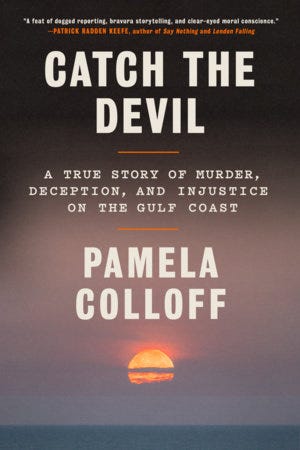
Welcome back to SOURCE NOTES, where we go behind the curtain with your favorite authors of historical narrative nonfiction. I haven’t updated this Substack since—checks archive—July 9. That’s because my hair was on fire over the summer finishing my next book, which I finally submitted to my editor last week 😬. More to come on that. But in the meantime, what better way to get back into the swing of things than with my pal Pamela Colloff, whose excellent debut, CATCH THE DEVIL: A True Story of Murder, Deception, and Injustice on the Gulf Coast, hit the New York Times Best-Seller list and made Pam a finalist for the 2026 Kirkus Prize. If you’re into grifter yarns, public-records requests, or criminal justice, this one’s for you.
I have a vague memory of hanging out with you in Austin, maybe back in 2018 or 2019, and you telling me, like, Joe, there’s this crazy conman story I’m working on.
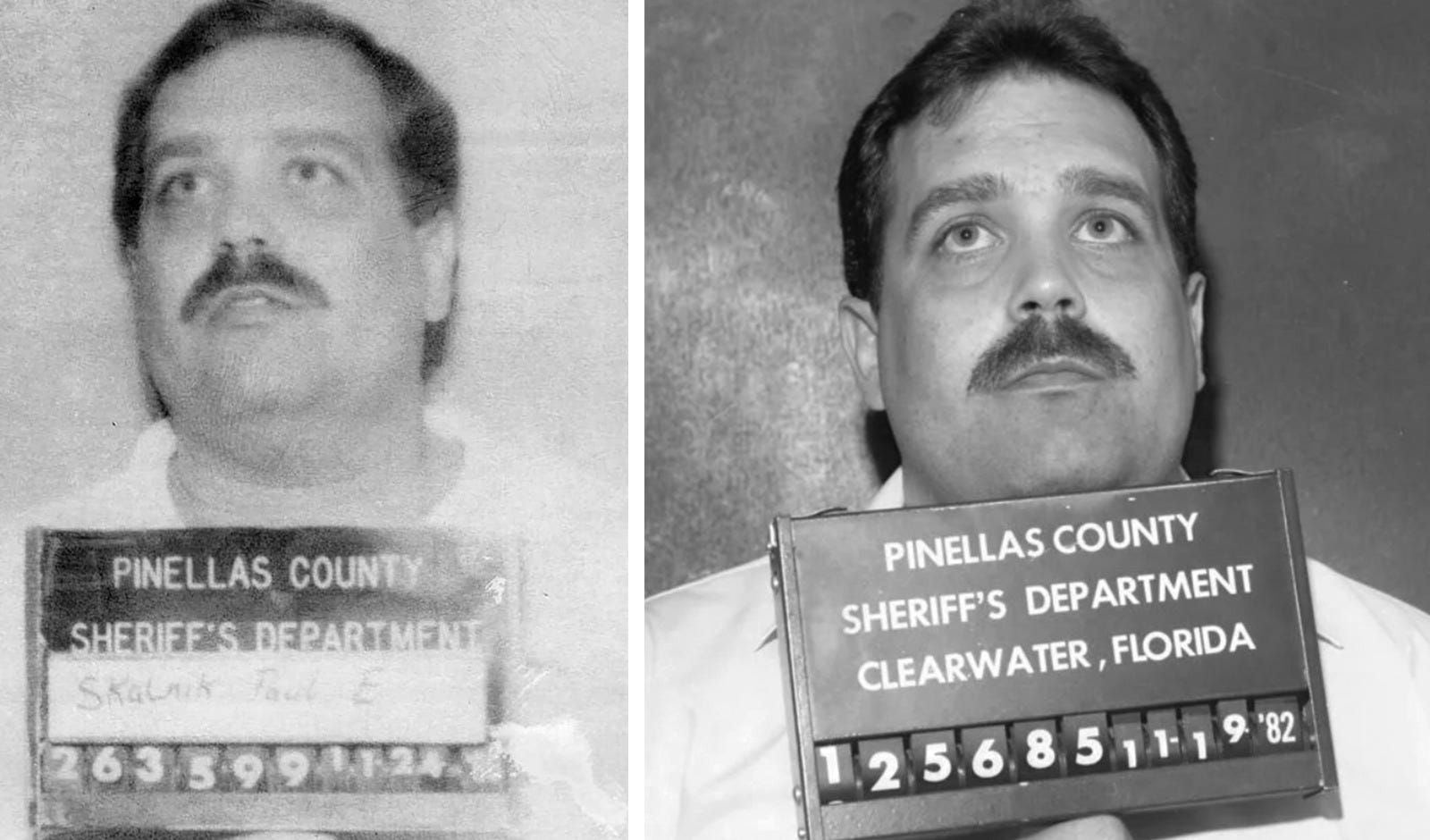
You have an incredible memory. This began in 2018 when a woman named Laura Fernandez, a scholar at Yale Law School, contacted me. We were connected by Rachel Aviv. Laura sent me an email and explained that she was representing this man on Florida’s death row. She’d become involved in this case because she was so concerned that this man, James Dailey, was actually innocent, and so she was writing to me about that case. But then, in this introductory email, she explains sort of at the end, you know, the star witness against him was this former police officer turned con artist, turned jailhouse informant named Paul Skalnik. I had been looking for a jailhouse informant story for like ten years, and it wasn’t for there being a lack of those kind of cases, but it was like, what narratively is going to draw people in? And the more I read about Paul Skalnik, I was like, this is the story.
What was the first thing you did?
I should make clear that I had a really advantageous running start, which is that Laura had dug into Skalnik’s story in a different death penalty case years earlier. She had a one-hundred-page timeline with linked documents already in place. That timeline is now, I want to say, two hundred fifty-eight pages. But her information focused almost entirely on Pinellas County, Florida, this one county where most of the book takes place. One of the mysteries for me was, how do we get from, he’s a cop in Austin in 1972 and ‘73, to he’s a like fully developed jailhouse informant by 1981 in Florida? So there were these big chunks of things that were missing.
How much research did you do before you went to try and talk to him?
I felt like with the timeline and some basic digging into court records and Newspapers.com, I had enough to try to go talk to him. Not to do the big interview, but to try to get buy-in from him. Skalnik was in federal prison in 2018 outside of Dallas, conveniently. So I drove up to this prison outside of Dallas, made a time to go see him, and tried to use that hour as a way to convince him that he should talk to me. I figured he might be enough of a narcissist that he might really like telling me his story. So, I went and I made my pitch to him, and he was like instantly the most incredible character. He immediately tells me he’s dying. He pulls out this bloody rag as proof. He hands me this page of a Xeroxed photo of a hundred-foot yacht that he said he kept in Belize. He talked about his offshore accounts in the Cayman Islands. And, most importantly, he talked about himself and prosecutors like he was a part of their team.
But he basically strings you along and then doesn’t cooperate?
Totally strings me along, and that goes on for months. He says, like, “Yeah, I would love to tell you everything.” And then it becomes very clear he’s not going to tell me anything. So that then kind of set me on the path for the reporting.
Give me a sense of the reporting.
By the end of this project, I’d interviewed well over a hundred people, and I contacted hundreds.
And then there was this parallel track of searching for public records and whatever else you could find about him in the historical record.
One of the greatest revelations of the book came from a Google search. One of the mysteries was, how did Skalnik get his start doing this? What was that missing time frame from, he’s a police officer and gets kicked off the force to, he’s this informant in another state. And I would just put in endless combinations of search terms. This was many many months into the reporting. But new stuff would pop up all the time as records were digitized. So even though the action of this book is primarily in the seventies and eighties, new things would pop up two months after I’d searched for it previously. So anyway, I can’t remember what combination of words it was, but I hit upon this article from the late seventies. It was in Spanish—which I do not speak, unfortunately—in like, a communist newspaper. And the newspaper was writing about a trial in Houston in 1979 that involved police misconduct. And all I could really piece together from looking at it was his name, Houston, trial, police—basic things. I figure out what it’s saying, and I realize it’s describing this pretty famous trial, the Moody Park Three trial, and that is Skalnik’s origin story. And it was just this random assortment of words put into Google.
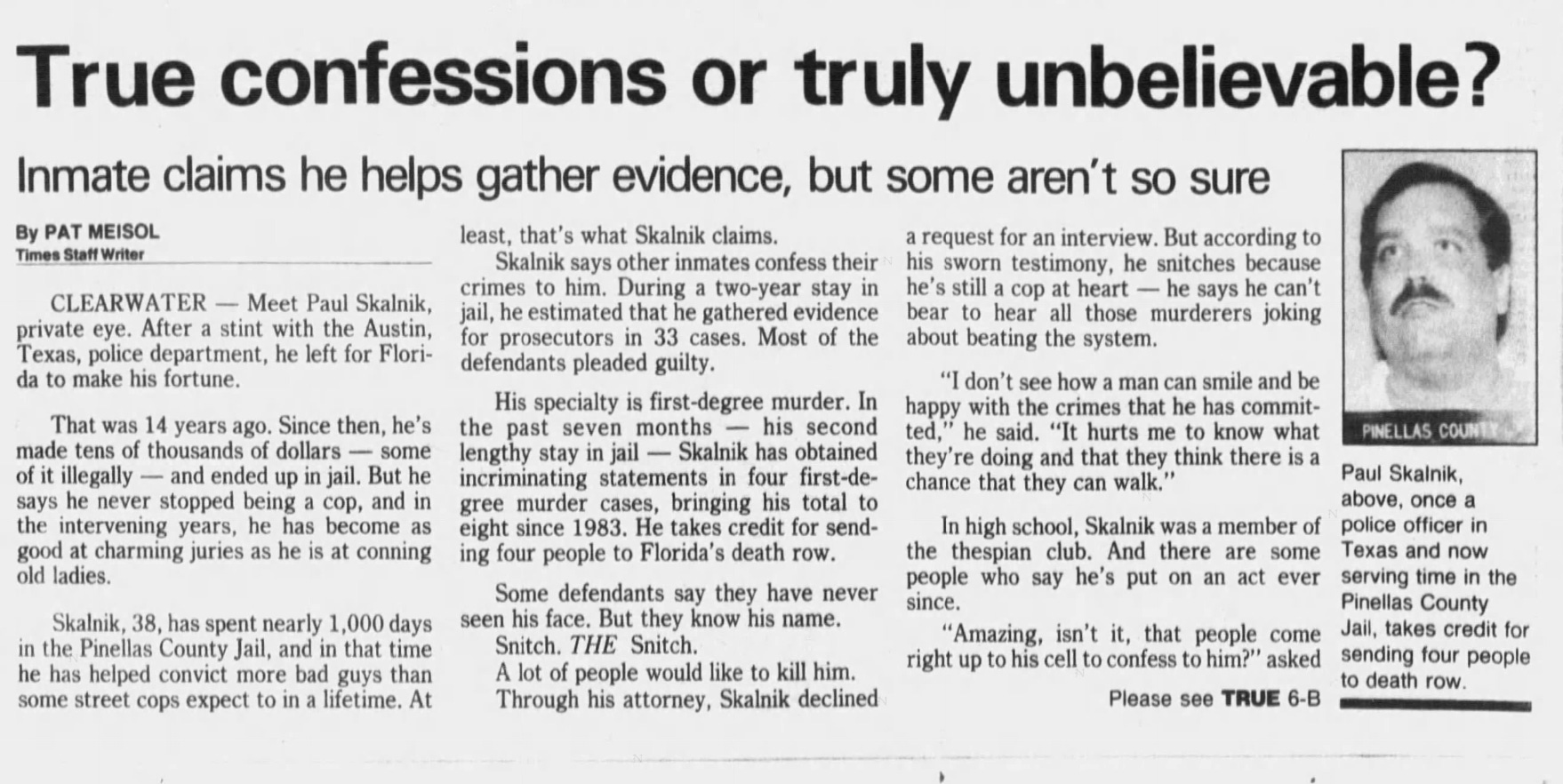
Anyway, to answer your question, because you asked about public records—I was very, very fortunate that so much of this story happened in Florida, because Florida has such incredible open records laws, and so I was able to get my hands on quite a bit by just filing very basic public record requests through, for example, the Pinellas County Sheriff’s Office portal.
Like you could just do it online?
You could do it online. They were extremely responsive. This was true, I should say, of every place in Florida. By contrast, I figured out for part of his life he was in Louisiana. I called a pretty rural parish, and I started asking whoever I got on the phone with about, you know, who do I contact in your office to file a public record request? And they were like, a what? And then there was also just, excavating so many court records. And again, fortunately, the dockets are digitized, so I was lucky in that respect.
How many public records requests do you think you filed altogether?
I have a spreadsheet somewhere of this stuff. It was over a hundred.
What were some of your biggest breakthroughs?
I went to have my final conversation with Skalnik before the publication of the article the book grew out of, and then he died shortly after that. He mentioned that his handler in Houston, where he’d gotten his start as a jailhouse informant, had been this investigator named Kenny Rodgers, which was an easy name to remember, and it was Rodgers with a “d.” It was enough information for me to find this person, who had been his handler in the seventies. And it turned out that Kenny had saved his daily work logs. He was able to give me so much of the origin story of how Skalnik got his start. I also found out that he was married to nine different women. I think there may be more, but that’s what I am certain of. And so I began writing to each of them, and that was really tough. There was a lot of resistance. I think some of the most intense no’s I’ve ever gotten in my career came from several of those women. Like, you must never, ever, ever contact me again. These are women who not only had been tricked emotionally into falling for him, but he had taken every cent they had. He had ruined their credit. And he had, in some cases, sexually abused their daughters. My way in became the daughters. Like, if you think about how a teenage girl observes and watches her mother fall under the spell of this man who’s arrived in their life, in a way, that is a more helpful storyteller, maybe, than the woman herself. Those girls, now women, became sort of the backbone of that part of the book.
What else?
There’s a part of the book that involves this murder case in Missouri, and all of those records were at a county clerk’s office in very rural Missouri. This was during the pandemic and everything was shut down. And I reached this woman who was still coming into the office and doing everything, and she got me those records at a time when it was like, impossible to get anything, and I just remember being so grateful for that. Also, Skalnik died in the earliest days of lockdown, but the nursing home where he was wouldn’t tell me that. I just knew he wasn’t there. And so I had to call around to like, every justice of the peace in this part of Texas, every funeral home, and I finally hit upon this one funeral home, and this woman’s like, hold on, let me look at our records—yeah, we have him, are you next of kin? And that was how I pieced together that he had died.
What about some things you weren’t able to get?
There’s so much. I was able to interview several of the wives and talk to them about what that experience was like. But there are still questions I have about Skalnik’s earliest days. Like, I was able to show that the first lie he ever told was that he was adopted, which he wasn’t. I found his birth records, and I think there’s a larger story there. He came from a very tough background, and he had an extremely physically abusive alcoholic father. But I wish I knew exactly what made him take the turn that he took.
Was there anything you stumbled on in your research for CATCH THE DEVIL that might lead to another magazine article or book?
I really want to get back to junk forensic science. That is my obsession, and Skalnik was always brought into cases where there was no forensic evidence. I think this model of, like, getting into a story sideways is one that I really like. That said, I don’t have a next story, which means I’m in a total panic. But I’m hoping maybe along the way on the book tour I’ll find something exciting.
What an interview! Really loved reading this. I can see why that article in the Google search was just the right article and because of the publication it probably said things others might not have. Wow. Thoroughly enjoyed this! It’s so fascinating where all the research comes from. So many hours upon hours of it. Been learning more about research with the different articles I’ve been getting published. The thrill of the chase :)